Getting lost in a building should no longer be part of the user experience. Yet, between endless corridors, changing areas and contradictory signs, wayfinding remains a major friction point in many venues. Today, digital technology does more than inform: it guides, anticipates, reassures and streamlines. A new generation of solutions is radically transforming the way visitors move around, interact with and understand their environment.
How to improve wayfinding with digital technology: a revolution for modern venues
The digital transformation of wayfinding is accelerating across public and private venues. According to Grand View Research, the global digital signage market is expected to reach $35.94 billion by 2025. This shift is driven by interactive wayfinding solutions that are reshaping the user experience. How can your organisation leverage these innovations to make a tangible improvement to your visitors’ journeys?
Also to read : What Are the Latest Marketing Trends Transforming UK Businesses?
Why choose a digital wayfinding solution rather than traditional signage?
Traditional signage has significant limitations in today’s constantly evolving environments. Fixed signs, outdated information and the inability to adapt in real time create frustration for visitors and recurring costs for venue managers.
Digital wayfinding solutions revolutionise this approach thanks to exceptional flexibility. Content is updated instantly from a centralised interface, making it possible to change routes, opening times or information without any physical intervention. This immediate adaptability is particularly valuable during special events, building works or organisational changes.
Also read : Unlock your creativity with versatile logo mockup designs
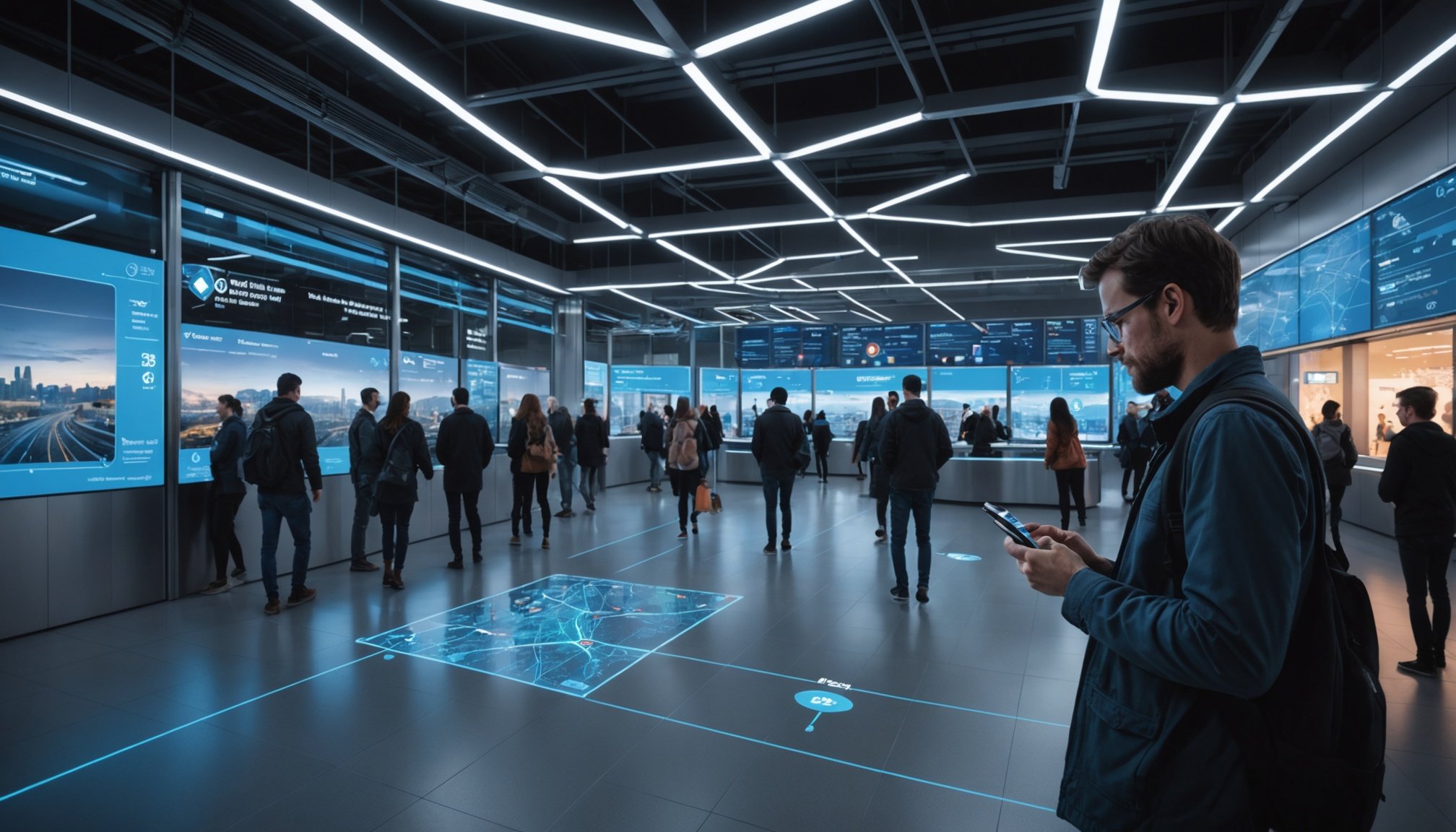
The user experience is greatly enhanced with augmented reality technology and app-free QR codes. Visitors instantly access personalised routes, contextual information and interactive services directly on their smartphone. This intuitive approach removes technological barriers while offering a modern, engaging navigation experience.
In the long term, digital investment delivers substantial savings. No more printing, installation and replacement costs associated with traditional signage. Built-in analytics enable continuous optimisation of routes and improvements to your venue’s operational efficiency.
These revolutionary technologies transform the visitor experience
Integrated augmented reality is a game-changer for visitor navigation. This technology overlays contextual information directly onto the real environment, allowing users to visualise their route in real time. Directions appear as virtual arrows in the space, creating intuitive navigation that eliminates hesitation.
Smart QR codes transform accessibility. There is no need to download a dedicated app: a quick scan with a smartphone camera provides instant access to the navigation system. This universal approach works on all modern devices and removes technical hurdles that often discourage visitors.
Touchscreen interfaces completely rethink how people interact with signage. These responsive displays detect natural gestures and automatically adapt to each user’s preferences. Intuitive design enables immediate self-service navigation, even for those who are less familiar with digital technologies.
This convergence of technologies significantly reduces wayfinding-related stress. Visitors gain confidence and autonomy, turning navigation into a smooth, reassuring journey.
Universal accessibility: a major challenge for all venues
Digital accessibility is no longer optional—it is a legal and moral obligation. Modern digital navigation solutions now include features specifically designed for people with disabilities, radically improving their experience in public and private spaces.
ADA compliance is becoming an essential standard for all venues open to the public. Digital guidance technologies offer practical solutions: text-to-speech for visually impaired users, high-contrast interfaces, simplified navigation for people with reduced mobility, and controls adapted to different interaction needs.
Beyond regulatory requirements, digital accessibility is a strong competitive advantage. Venues that invest in inclusive solutions demonstrate social responsibility and naturally broaden their audience. This approach also delivers measurable return on investment through an improved overall user experience and reduced reliance on in-person assistance.
Measure and optimise: data in the service of performance
Navigation data reveals valuable insights that can transform the visitor experience. With real-time analytics, you can visualise user journeys, identify friction points and optimise pedestrian flows.
This data-driven approach enables informed decisions to continuously improve your layout and digital signage.
-
Average navigation time: duration of use and route efficiency
-
Congestion areas: identification of bottlenecks
-
Popular destinations: the most searched services and spaces
-
Drop-off rate: points where visitors abandon their search
-
User satisfaction: direct feedback and experience ratings
-
Measurable ROI: impact on footfall and resource optimisation
These metrics turn your venue into an intelligent environment that adapts to visitors’ real needs.
Which venues benefit most from this innovation?
Hospitals are among the first to benefit from this technology. In complex environments dominated by stress and urgency, intuitive navigation becomes crucial. Patients find their department instantly, reducing anxiety and freeing reception staff for more important tasks.
International airports make particularly effective use of these innovations thanks to their multilingual audiences. Automatic language preferences and real-time flow management transform the passenger experience. Large shopping centres follow this trend, optimising customer routes towards shops and services.
University campuses are adopting these solutions at scale to guide students and visitors across vast areas. Museums modernise their approach by combining navigation with enriched cultural content. As for multi-site companies, they strengthen their brand image while improving the welcome experience for clients and partners.
Installation relevance can be assessed using three criteria: architectural complexity, visitor volume and the diversity of audiences served.
Your questions about digital wayfinding
How can digital signage improve the customer experience in my venue?
Digital signage reduces visitor stress by providing instant, personalised information. It decreases waiting times, guides people efficiently to their destination and adapts in real time to each user’s specific needs.
What are the advantages of installing interactive wayfinding kiosks?
Interactive kiosks offer multilingual navigation, instant updates and improved accessibility. They also collect valuable data on visitor flows while significantly reducing requests for staff assistance.
Is digital wayfinding really more effective than traditional signage?
Digital wayfinding is reportedly 60% more effective according to recent studies. It adapts dynamically to change, proposes optimised routes and provides contextual information that static, traditional signage cannot offer.
How can I measure the impact of a digital guidance system on visitor satisfaction?
Built-in analytics measure navigation time, usage rates and user journeys. Targeted satisfaction surveys and behavioural data analysis make it possible to precisely assess improvements to the visitor experience.
What types of venues can benefit from a digital wayfinding solution?
Hospitals, shopping centres, airports, universities and complex businesses all benefit from Eye-in solutions. Any venue open to the public with multi-level architecture or large areas can benefit from this technology.